RICHARD NICHOLSON of CHESTER
A WORLD OF ANTIQUE MAPS AND PRINTS

The Cartographer
MOSTYN JOHN ARMSTRONG
Flourished 1769 - 1791
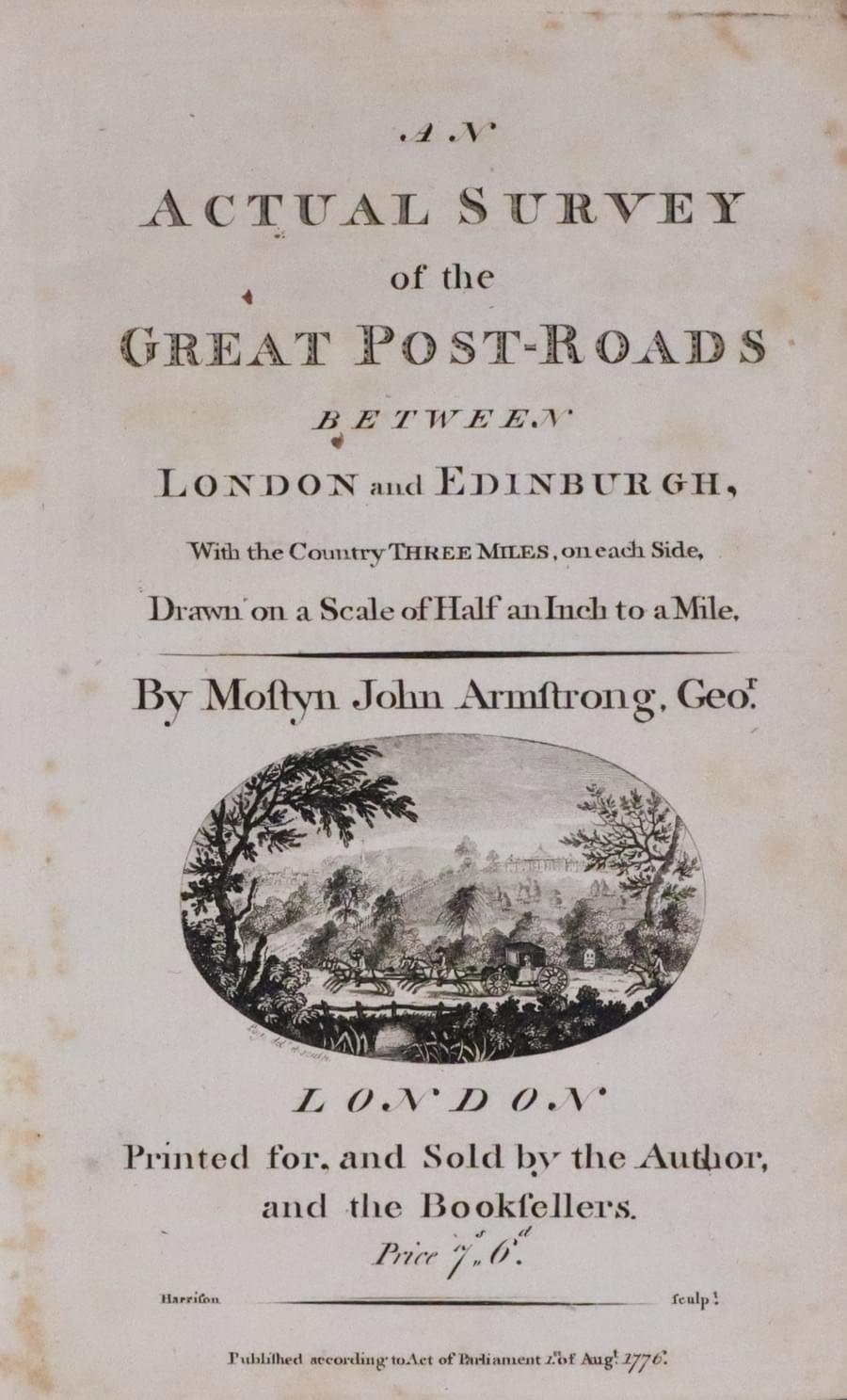
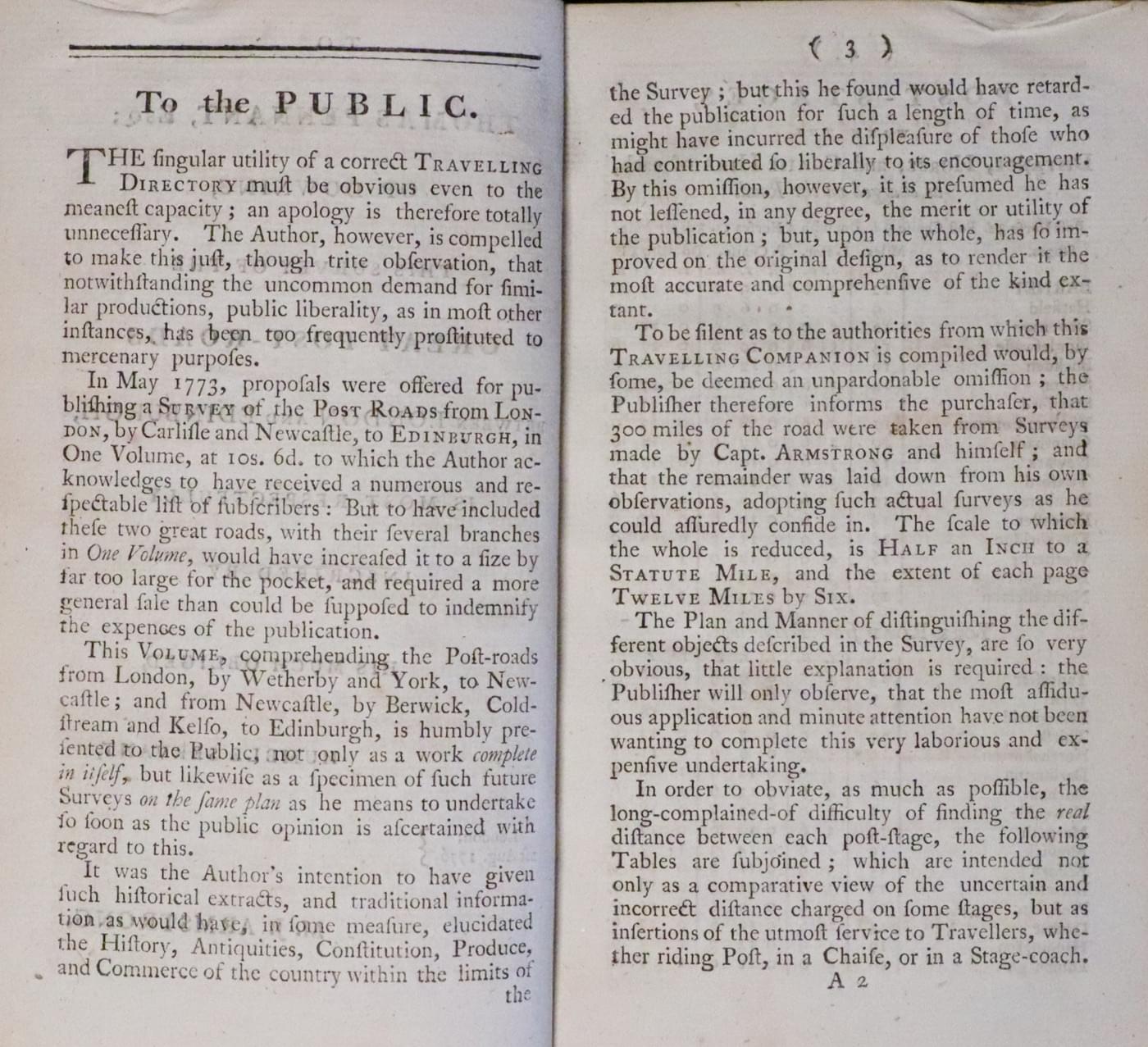
Mostyn John Armstrong was the son of Captain Andrew Armstrong (1700 - 1794), a surveyor and publisher working in the Scottish borders. He followed in his father's footsteps and they worked together for a number of years producing topographical works as well as county and road maps. Mostyn is perhaps best known for his mapping of the coaching and post roads which culminated in the publishing of An Actual Survey of the Great Post-Roads between London and Edinburgh in 1776. This book must have been of great use to travellers and merchants. The price of it was 7 shillings and 6 pence (7/6d) which would relate to several days wages now.
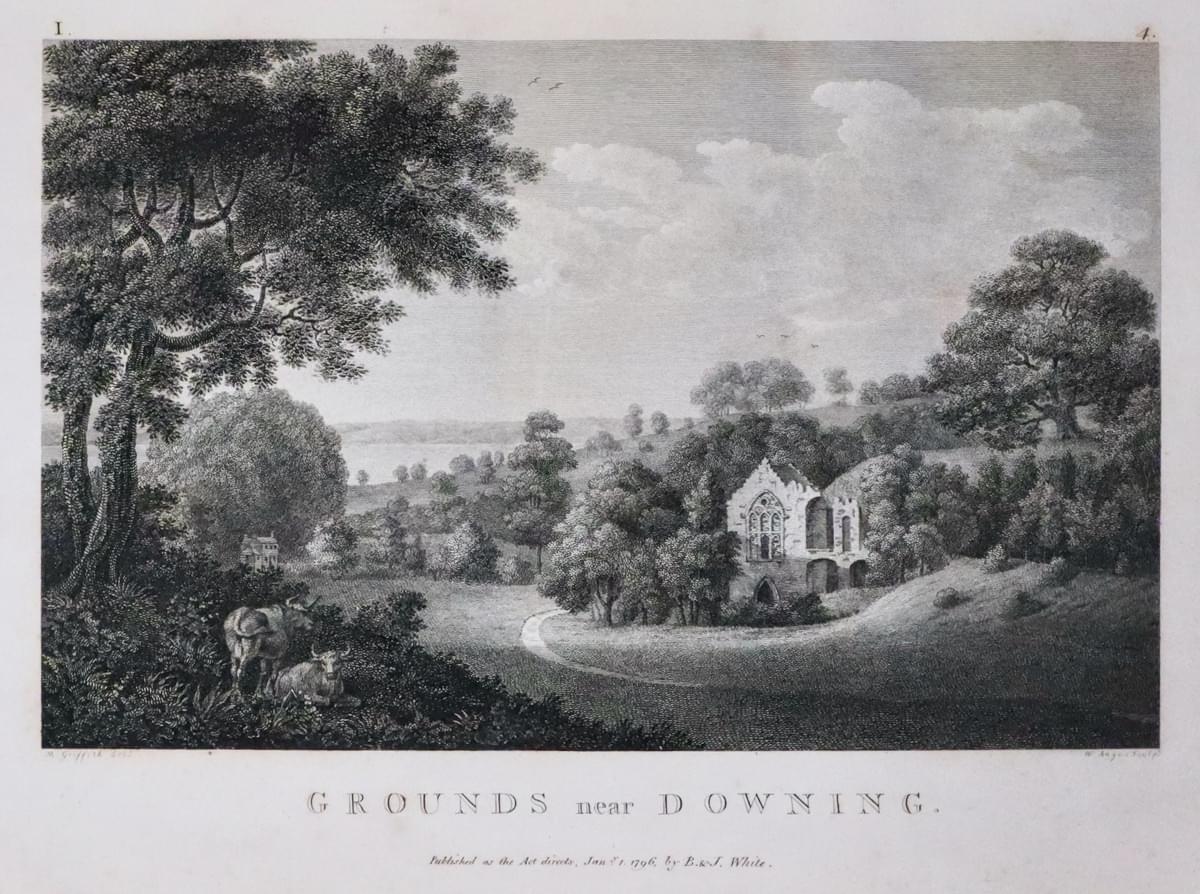
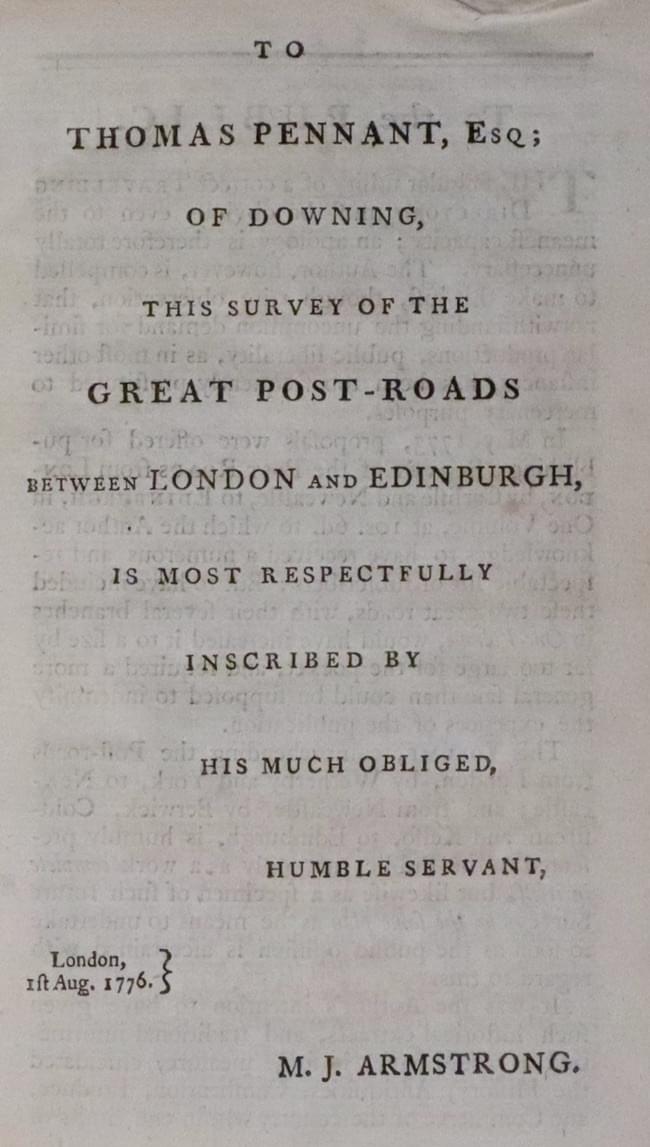
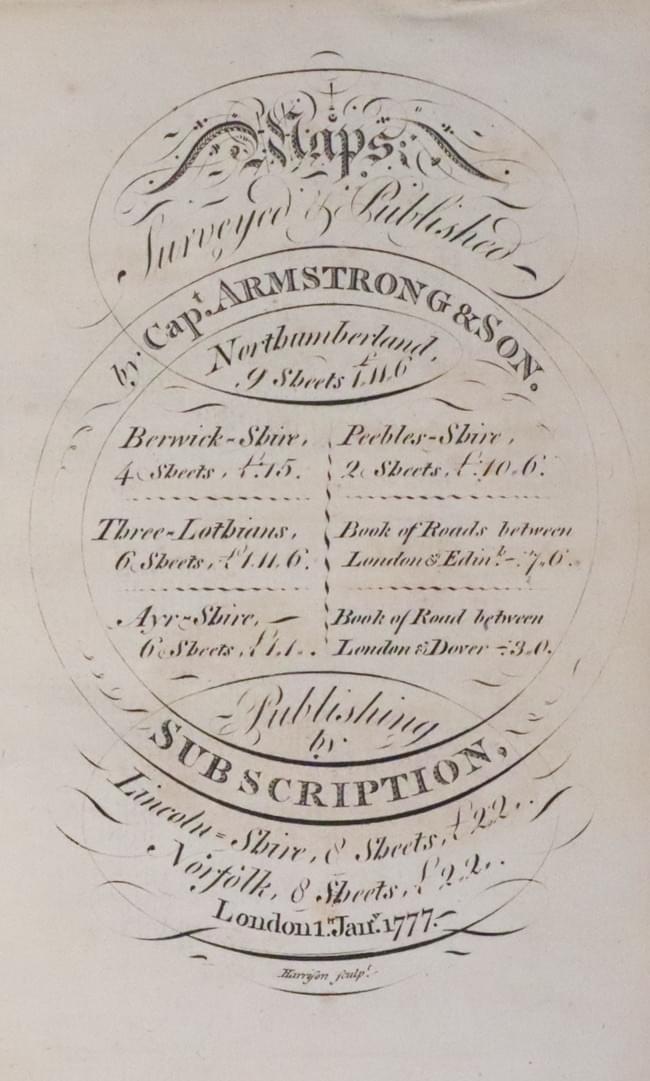
His father's large scale maps are advertised in the work with a two sheet map of Peebles-shire atvertised to 10 shillings and 6 pence; the three Lothians on six sheets at 1 pound 11 shillings 6 pence and Ayrshire displayed on 6 sheets for 1 pound 1 shilling ( a guinea.) The work is dedicated to the well known Welsh writer, traveller and antiquarian Thomas Pennant who lived at his family estate, Downing Hall, near Whitford in Flintshire. I would imagine that Mostyn would have been most pleased to dedicate this major work of his to this great traveller of the day. Thomas Pennant set out from his home near Holywell in Flintshire on his many travels and documented all that happened to him. These perambulations from another age make fascinating reading.
The work is dedicated to the well known Welsh writer, traveller and antiquarian Thomas Pennant who lived at his family estate, Downing Hall, near Whitford in Flintshire. I would imagine that Mostyn would have been most pleased to dedicate this major work of his to this great traveller of the day. Thomas Pennant set out from his home near Holywell in Flintshire on his many travels and documented all that happened to him. These perambulations from another age make fascinating reading.
-

Mostyn Armstrong Great Post Roads title page
-

Armstrong Post Roads dedication to Thomas Pennant
-

Advert for Andrew Armstrong's maps 1777
-

Introduction of Armstrong's Great Post-Roads 1776
More Information to Come
RICHARD NICHOLSON
of CHESTER
Stoneydale
Pepper Street
Christleton
Chester
CH3 7AG
Telephone
01244 336004
International 44 1244 336004

I have been buying and selling antique maps since the early 1960's during which time I had a gallery in Watergate Street, Chester for 30 years. I am now able to offer through my websites a personal service to map and print collectors.